Please note our holiday schedule for the 4th of July!
Wednesday, July 4th:
-
University Park – CLOSED
-
Central Square – OPEN 8AM-8PM

[col size=’1/3′ pos=’first’]

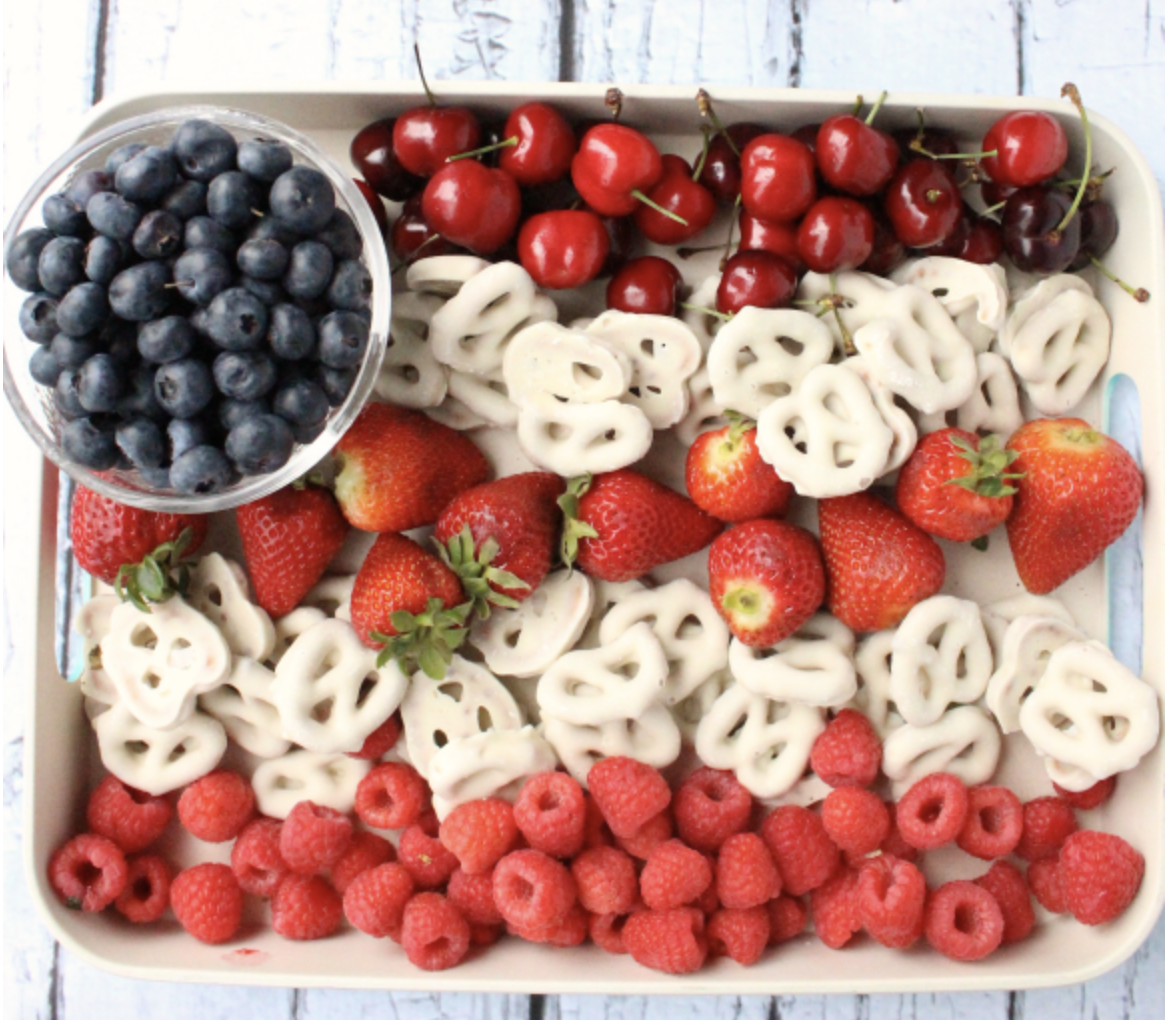
A healthy appetizer or burger topping! Besides, why go a day without avocado?
[/col]
[col size=’1/3′ pos=’second’]

For friends and family with special diets.
[/col]
[col size=’1/3′ pos=’last’]

No more fights over choosing between pizza and pasta!
[/col]
[col size=’1/3′ pos=’first’]

Greek yogurt makes this frozen yogurt a healthy and easy alternative to make at home!
[/col]
[col size=’1/3′ pos=’second’]
For friends with kids… or kids at heart!
[/col]
[col size=’1/3′ pos=’last’]

Because why not be tipsy and trendy
[/col]
Blog post written by Trainer, Sarah Oliver
[button link=”https://vimfitness.com/nutrition/” text=”LEARN MORE” color=”green” size=”large” fullwidth=”true”]
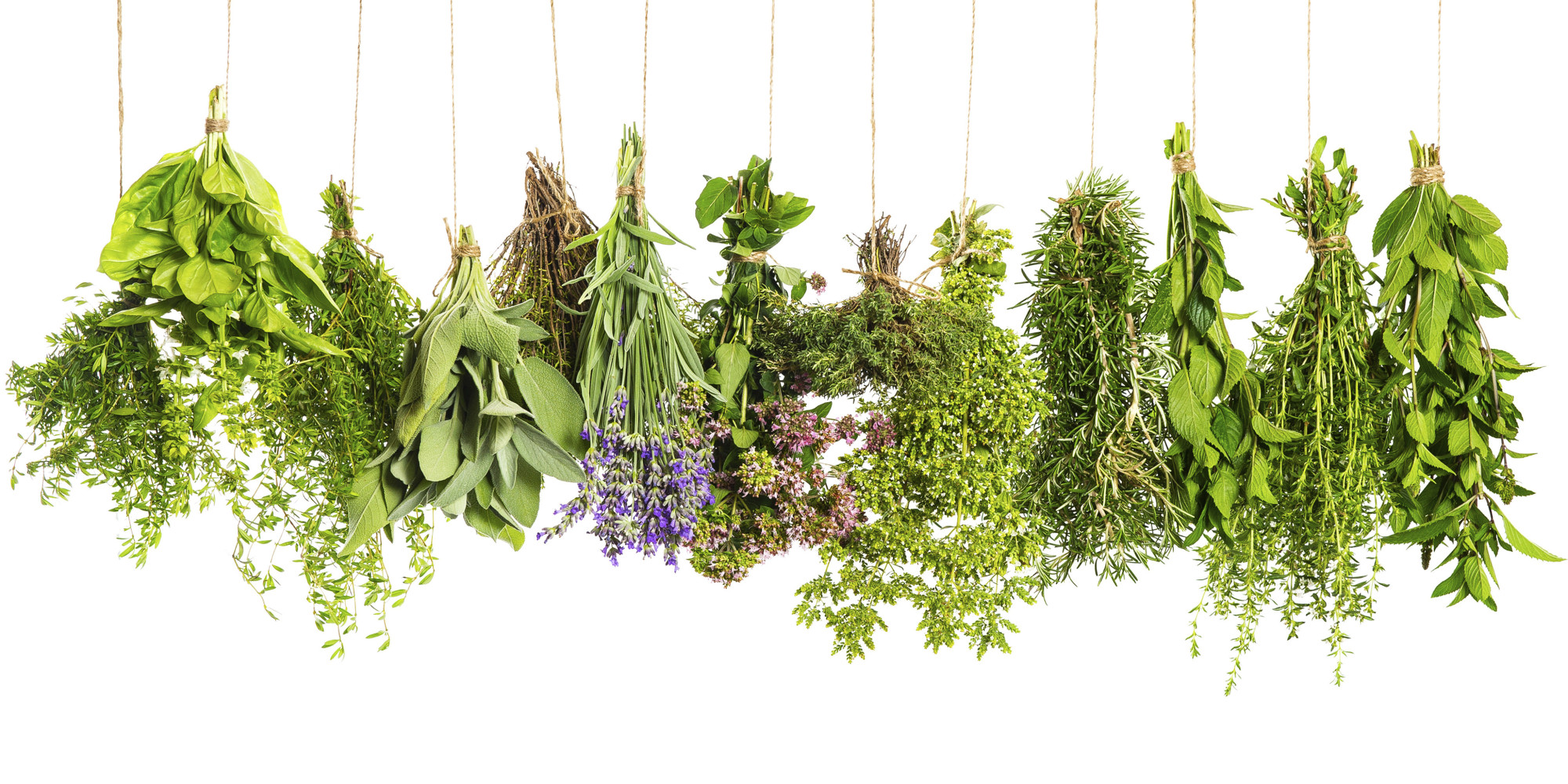
 Purchase herbs close to the time you plan to use them. When growing herbs in your own garden the ideal time for picking is in the morning after the dew has dried but before the sun gets hot. This helps ensure the best flavor and storage quality.
Blog post written by Trainer, Sarah Oliver
[button link=”https://vimfitness.com/nutrition/” text=”LEARN MORE” color=”green” size=”large” fullwidth=”true”]

Each household’s pantry will vary according to personal taste, ethnic background, and food allergies, but these 15 items are a great way to get started.
 1. Beans
I like to keep a variety of dried or canned beans, but I always make sure my pantry has at least two: lentils and chickpeas. Lentils cook quickly and are great additions to soups, pilafs, and salads. I like to throw chickpeas into pasta dishes and vegetable braises and stews. Pinto, black, kidney, and cannellini beans are also good to have on hand.
Using a variety of grains lends nutrition, texture, flavor, and makes vegetarian and vegan meals more interesting. I like to keep my pantry stocked with brown rice, white rice, quinoa, spelt, farro, millet, and bulgur.
Once you know how to prepare it, tempeh can be one of the best staple sources of protein. It can be refrigerated for a week or two (check the date on the package) and will keep up to several months in the freezer.
Like tempeh, tofu is not strictly a pantry item, but it’s an essential for vegetarian kitchens. I like to keep blocks of refrigerated extra firm tofu for baking and frying, vacuum-packed silken tofu to blend into dressings and puddings, and dried tofu for soups and stir-fries.
I always have almonds and cashews and try to keep pistachios and pine nuts around, too. Whole or chopped nuts can be used in salads and grain dishes. Ground nuts can add body to lasagna. And there’s always pesto. Extend the life and freshness of nuts by keeping them in the freezer.
Raisins, dried apricots, and dates are not only great for snacking, but they can add unexpected and delicious flavor to grain dishes, vegetable braises, and sautéed greens.
I prefer to make stock from scratch and keep it in the freezer. But if you don’t have the time or inclination, there are plenty of good store-bought options.
Nutritional yeast is somewhat of a new pantry item for me, though I’m very quickly coming to love it. It can be used in sauces or as a coating for tofu, and sprinkled on potatoes and popcorn.
I like to keep both light and dark miso paste in the refrigerator for different degrees of savoriness, but if I had to choose just one, it would be the mellow white variety. Miso makes excellent soup as well as dressings for salad, vegetables, and tofu.
Tahini, or sesame paste, often works in conjunction with miso in my kitchen. A quick tahini-miso sauce (try adding lemon juice and garlic, too) can be poured over steamed vegetables, tofu, or tempeh for simple weeknight dinners.
I like to keep several kinds of seaweed, from sheets of nori that can be wrapped around rice and vegetables, to kelp and kombu that add flavor to broth, to hijiki that can be reconstituted and used in salads and vegetable dishes.
From making rich curries and roasting vegetables, to searing tofu and even baking, coconut oil is super versatile.
Maple syrup is my favorite natural sweetener. It’s perfect for baking, making dressing and glazes, and of course, you can never use too much of it on pancakes.
Flax seeds are super nutritious and loaded with fiber and Omega-3 fatty acids. I love them stirred in my oats, mixed into smoothies, and baked into breads and muffins. And, combined with a little bit of water, ground flax also works as an egg substitute.
Blog post written by Trainer, Sarah Oliver
[button link=”https://vimfitness.com/nutrition/” text=”LEARN MORE” color=”green” size=”large” fullwidth=”true”]

(I personally, didn’t need a DNA test for this one, everyone in my family knows I’m a chocoholic!)
It could be that you have a FGF21 gene variant. A study published in Cell Metabolism shows that if you have a variant of this gene, you are 20% more likely to enjoy and seek out sugary substances.
You may not be a “super-taster.” Other research has shown that some people (25% of the population) are what are called “super-tasters,” and these people are extremely sensitive to bitter foods. Super-tasters are more sensitive to bitter tastes simply because they have more taste papillae and taste receptors on their tongues that make them more sensitive to bitter tastes. They’re also more sensitive to sweet, salty and umami tastes, but to a lesser extent. They tend to have a reduced preference for sweet and high fat foods. (Super-tasters also tend to consume more salt then non-tasters because salt masks bitter flavors.)
But don’t get down! Remember, it’s always possible to learn to like healthier, less sugary sweets, even if you have a deep-rooted sweet tooth – no matter what kind of taster you are! Super-tasters, non-tasters and everyone in between have one thing in common; their taste buds regenerate in about 10 days. So if you notice sugar cravings start to subside after a few weeks on a whole-foods diet, this could be why!
Blog post written by Trainer, Sarah Oliver
[button link=”https://vimfitness.com/nutrition/” text=”LEARN MORE” color=”green” size=”large” fullwidth=”true”]
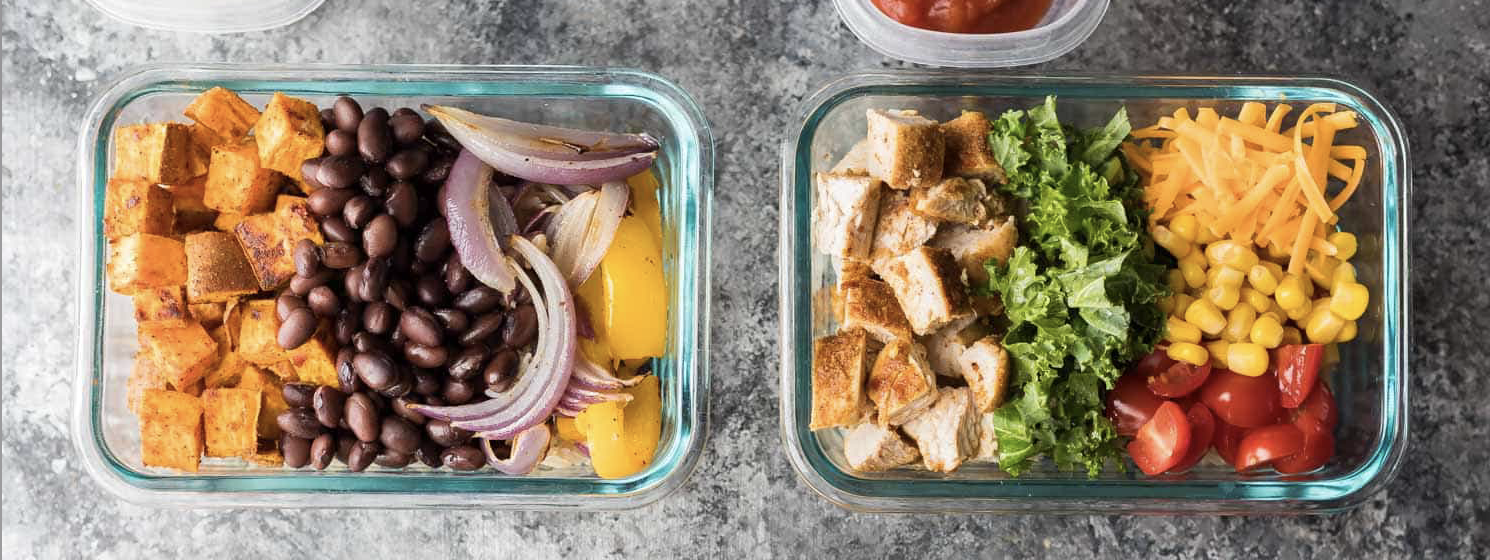
Use the weekend to your advantage and plan your meals for the week ahead of time. There’s no one way to do it, and you definitely don’t have to be super strict about it 100% of the time. But even if you just plan a few dinner and snack options, you’ll be on track to a healthier lifestyle!
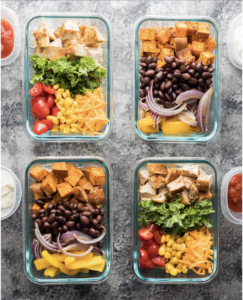 Map out your meals for the week
If you’re new to meal planning, you might want to start small by just planning out one type of meal for the week, such as breakfast. Once you master it, add another meal to the plan. Try setting aside 10 minutes on Friday afternoon or evening to map out the coming week. When planning your meals, consider the following:
Now that you know what you’re going to eat, make a list! Check your fridge and pantry to see what you already have, then make a list of anything else you need. That will also reduce the chance of impulse buying or wandering aimlessly around the market looking for some inspiration. Go through your spice and seasoning drawer to purchase or replace any old spices, except for salt and pepper (if your spices are over one year old, it’s time to replace them). Seasoned food just tastes better!
If you can, try to stop by your local farmers’ market. If you you’re pressed for time, make a one-stop trip to the grocery store. Shop in the morning to avoid busy grocery store lines in the afternoon and early evening.
Also, make sure to go through your cabinet full of containers to make sure you have enough food storage for the week. You might want to consider purchasing a new set of stackable containers.
Part of meal prep is deciding if you want to make everything for the whole week, prep some of the meals, or just chop up veggies and organize ingredients to be cooked fresh on the night you want a particular recipe. Many people like to get it all done on Sunday so all you need to do each night is microwave it. It will take a little more time out of your Sunday, but you’ll spend less time in the kitchen the rest of your week. Here are some prep tips!
Consider cooking double batches of recipes and freezing half, which you can then take out in a few weeks and reheat.
Sheet-pan meals are ideal if you want little to no clean-up. Just line a sheet pan with aluminum foil and load it up with veggies and a protein. Season and bake in the oven until done. When cool, load it into containers and recycle the foil. No clean-up!
One-pot meals are another great way to cook with little clean-up. Sauté your veggies in some heart-healthy oil, add brown rice or quinoa, your protein of choice, broth, and seasonings and then cover with a lid and simmer until done.
Use your slow-cooker to make soups, chili or stews. You can load up the slow-cooker in the morning before you leave and set it to cook on LOW for 8-10 hours. When you get home, all you have to do is serve. Make extra so leftovers can be enjoyed for days to come.
Breakfast: frittata (for Monday, Wednesday and Friday) and smoothie (Tuesday, Thursday)
Lunch: Leftovers from last night’s dinner for lunch. You can turn it into a sandwich, mix and match, or just eat it exactly the same as before!
Dinner:
Snacks (optional): prepare snack-size baggies with mixed nuts or make containers of chopped veggies and hummus. You could even bake your favorite banana bread recipe and cut it into single servings for dessert every night!
Blog post written by Trainer, Sarah Oliver
[button link=”https://vimfitness.com/nutrition/” text=”LEARN MORE” color=”green” size=”large” fullwidth=”true”]

[contactform email=”le*@********ss.com“]
First of all, your stomach and your mind are connected by what’s called the enteric nervous system. You know that feeling when you look up #foodporn and then your belly starts to grumble? Yup, that’s it. It also works the other way around: when you’re eating nutrient-dense food, you’re happier. When you gorge on some greasy fried food, you get an endorphin high for a bit, and then your mood plummets.
Often times people underestimate the power the mind can have over choices, emotions and physical feelings. But if these examples are not enough, try it yourself. If you pause, close your eyes, and just focus on your breath for a few minutes, you may notice your responses to hunger cues have changed. Because when you start to tune in to your mind and body, the distracting stimuli of the world fade away. Now you recognize whether you’re actually hungry, or if that was just a tasty-looking photo.
Your brain is like a muscle that needs to be flexed and challenged often if it is to get stronger or develop a new habit. A short, simple, daily meditation practice can help change your attitude towards food and actually aid in weight loss.
After a few weeks of daily meditation, usually it starts to become easier to quiet your mind. Don’t get frustrated if it seems like a daunting task that never improves – this is natural and will ease with practice. You just have to let go of your goals, return to your breath, and let yourself make mistakes. It’s ok! Let the thoughts come and go.
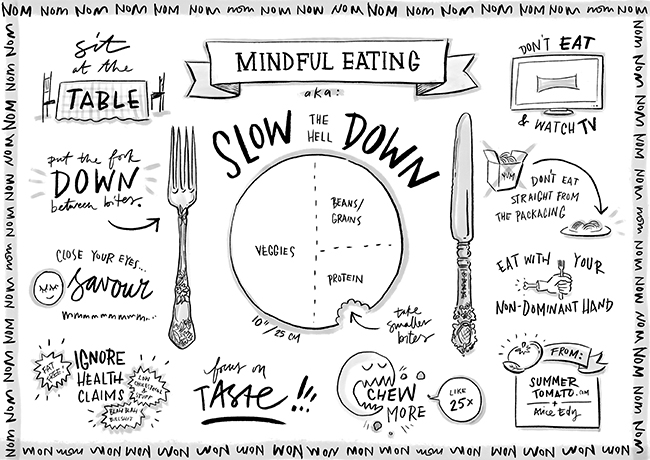
In our always-working society, people are multitasking while eating. If you can, try to put away distractions for just 20 minutes and really think about your food. Chew it fully, place your fork down in between every bite. Focus on the flavor, the texture, and how it feels to eat each bite of food. When you’re finished, notice how you feel. Do you still feel hungry? Are you full or satisfied? By practicing mindfulness when eating, you can become more in-tune with your hunger cues. You may find you’re not as hungry as you initially thought, or that a certain food is more flavorful than you realised. Mindful eating makes you not only feel more satisfied, but also more grateful for the nourishment you’re getting and more positive after your meal has ended.
I could attempt to list all the holistic health benefits of meditation, but I will leave that for your googling pleasures. But today, challenge yourself to one meal or snack where you remove all distractions, slow down and truly taste your food.
Blog post written by Trainer, Sarah Oliver
[button link=”https://vimfitness.com/nutrition/” text=”LEARN MORE” color=”green” size=”large” fullwidth=”true”]
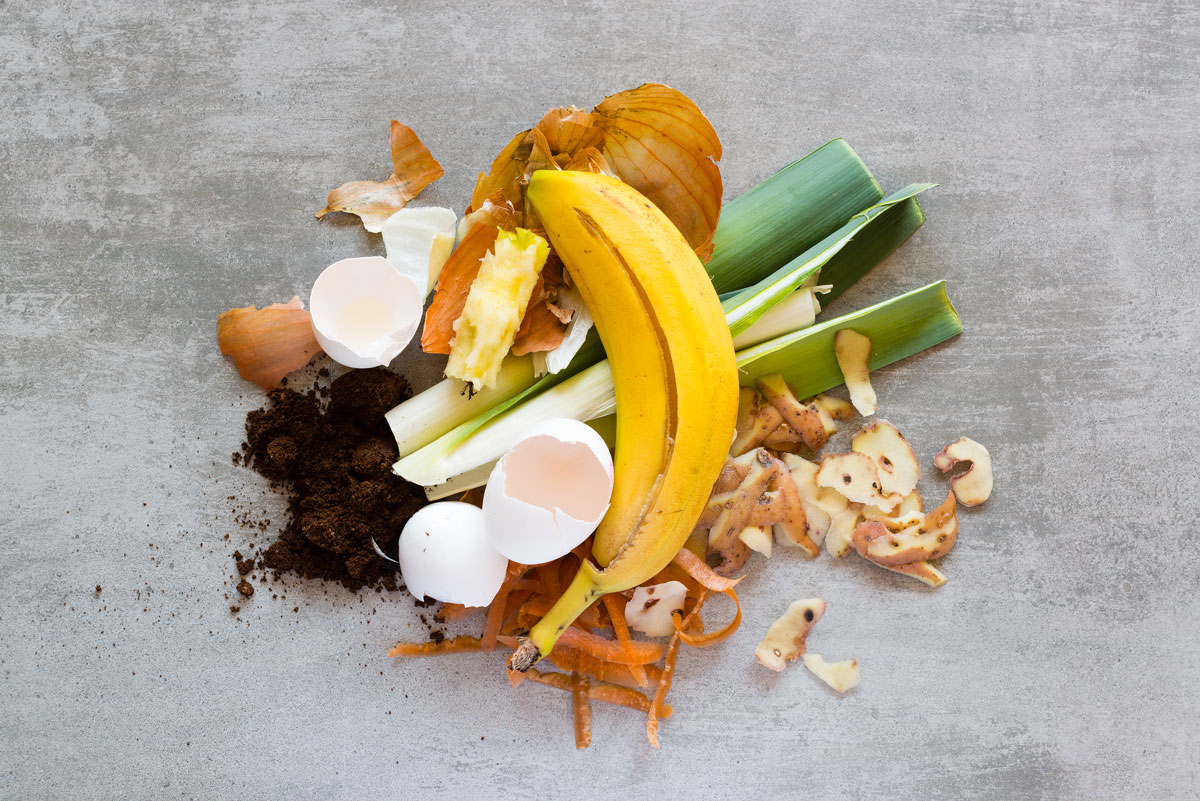
Plan Smarter:
Keep a list of meals and their ingredients that your household already enjoys. That way, you can easily choose, shop for and prepare meals.
Make your shopping list based on how many meals you’ll eat at home. Will you eat out this week? How often?
Plan your meals for the week before you go shopping and buy only the things needed for those meals.
Include quantities on your shopping list noting how many meals you’ll make with each item to avoid overbuying. For example: salad greens – enough for two lunches.
Look in your refrigerator and cupboards first to avoid buying food you already have, make a list each week of what needs to be used up and plan upcoming meals around it.
Buy only what you need and will use. Buying in bulk only saves money if you are able to use the food before it spoils.
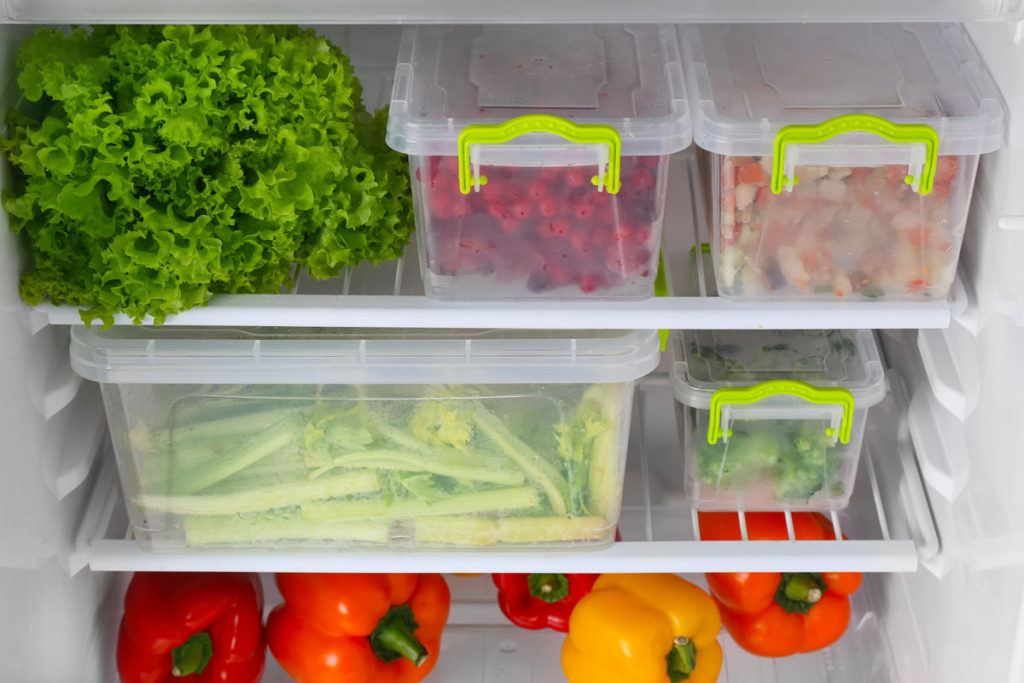 Store Properly:
Find out which fruits and vegetables need to be refrigerated and which don’t to help them stay fresh longer.
Freeze, preserve, or can surplus fruits and vegetables – especially abundant seasonal produce.
Many fruits give off natural gases as they ripen, making other nearby produce spoil faster. Store bananas, apples, and tomatoes by themselves, and store fruits and vegetables in different bins.
Wait to wash berries until you want to eat them to prevent mold.
If you like to eat fruit at room temperature, but it should be stored in the refrigerator for maximum freshness, take what you’ll eat for the day out of the refrigerator in the morning.
Prep Tips:
When you get home from the store, take the time to wash, dry, chop, dice, slice, and place your fresh food items in clear storage containers for snacks and easy cooking.
Befriend your freezer and visit it often. For example,
Freeze food such as bread, sliced fruit, or meat that you know you won’t be able to eat in time.
Cut your time in the kitchen by preparing and freezing meals ahead of time.
Prepare and cook perishable items, then freeze them for use throughout the month. For example, bake and freeze chicken breasts or fry and freeze taco meat.
Thrifty Secrets:
Shop in your refrigerator first! Cook or eat what you already have at home before buying more.
Have produce that’s past its prime? It may still be fine for cooking. Think soups, casseroles, stir fries, sauces, baked goods, pancakes or smoothies.
If safe and healthy, use the edible parts of food that you normally do not eat. For example, stale bread can be used to make croutons, beet tops can be sautéed for a delicious side dish, and vegetable scraps can be made into stock.
Learn the difference between “sell-by,” “use-by,” “best-by,” and expiration dates.
Are you likely to have leftovers from any of your meals? Plan an “eat the leftovers” night each week.
At restaurants, order only what you can finish by asking about portion sizes and be aware of side dishes included with entrees. Take home the leftovers and keep them for or to make your next meal.
At all-you-can-eat buffets, take only what you can eat.
Blog post written by Trainer, Sarah Oliver
[button link=”https://vimfitness.com/nutrition/” text=”LEARN MORE” color=”green” size=”large” fullwidth=”true”]
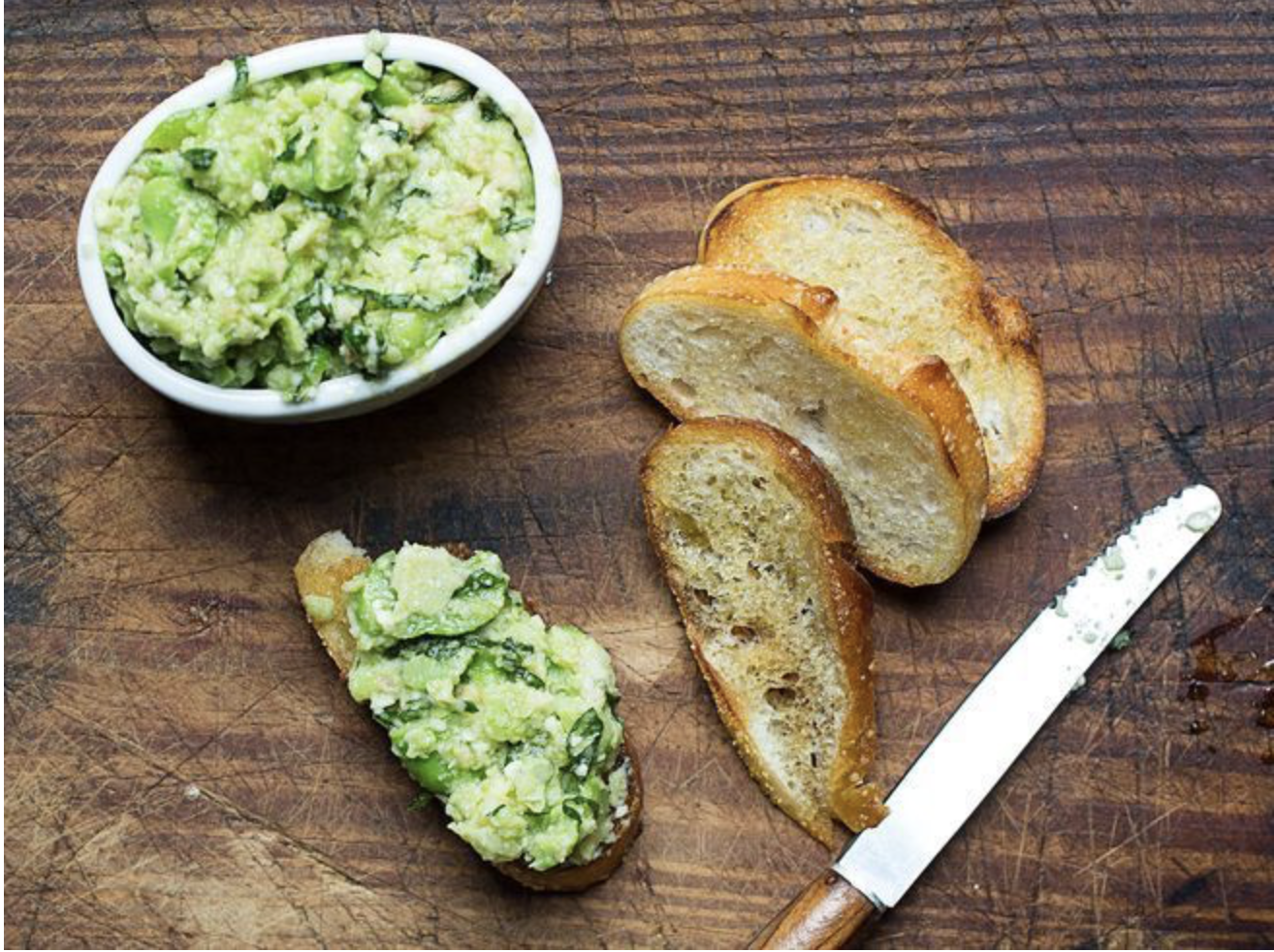
I have no idea how to use morels or nettles, so if you have any ideas, let me know! I’m going to focus today’s blog on a spring recipe that involves the nutrient-dense veggie: fava beans!
Ingredients:
Steps:
Blog post written by Trainer, Sarah Oliver
[button link=”https://vimfitness.com/nutrition/” text=”LEARN MORE” color=”green” size=”large” fullwidth=”true”]